Friday, February 11, 2011

Pediatric Cataract Initiative Awards

Innovative Programs in Nepal, India and Nigeria Receive Funding

ROCHESTER, N.Y. - The Pediatric Cataract Initiative has announced its inaugural small research grant recipients for treating and preventing vision loss in children.

The Initiative, a partnership of the Bausch + Lomb Early Vision Institute and Lions Clubs International Foundation (LCIF), will provide two research grants of US$50,000 each to:
Lumbini Eye Institute to study the cost and clinical effectiveness of a comprehensive pediatric cataract surgery follow-up system in western Nepal and adjacent northern Indian states. The outcomes are expected to have a wide-ranging effect on follow-up regimens in developing nations worldwide.
Calabar Teaching Hospital to investigate the burden and causes of severe visual impairment and blindness among children in the Cross River State of Nigeria. This is believed to be the first large-scale study of the root causes of childhood blindness in Africa.


Launched in June 2010, the Pediatric Cataract Initiative is the first dedicated global effort aimed at preventing and treating cataract - a clouding of the eye's natural lens - in children so as to reduce childhood blindness. Causes of pediatric cataract can include intrauterine infections such as pregnancy rubella, metabolic disorders and genetically transmitted syndromes.

"While the knowledge and techniques for diagnosis and treatment of pediatric cataract are well known, there is a lack in the understanding of factors that determine success of interventions and factors that will enhance accessing services," said Dr. Gullapalli Rao, chairman of the Pediatric Cataract Initiative Global Advisory Council and founder of the LV Prasad Eye Institute in Hyderabad, India.

The inaugural small research grant application was open to clinicians and researchers around the world. Members of the Pediatric Cataract Initiative Global Advisory Council, which is composed of eye health experts from around the world, met in December 2010 to review 16 small research grant applications from countries including India, Cameroon, Nigeria, Nepal, Guatemala, Kenya, the United States, the United Kingdom and elsewhere.

"In children, despite the best cataract surgery, long term and more frequent follow up is required because of changing refractive error due to their constantly growing eyes and the special concern of amblyopia, which is exclusive to children," notes Dr. Salma K.C. Rai, principal investigator, academic director and ophthalmic assistant training in-charge and consultant pediatric ophthalmologist at Lumbini Eye Institute, Nepal.

"It is very important for the pediatric ophthalmologist and the team to repeatedly stress to parents the importance of follow up visits, at least in the initial few years following pediatric cataract surgery. The seed needs to be sown at the right time, and any delay will result in poor results," said Dr. Rai.

"Receiving the grant will engage people in our region to take more action towards eliminating childhood blindness," said Dr. Roseline Duke of the Calabar Teaching Hospital in Nigeria. "At the end of our research, I hope to have restored good vision to children who are affected by cataract, and integrated those who have lost their vision into their schools and communities."

An estimated 1.4 million children are blind worldwide, 1 million of whom live in Asia and 300,000 in Africa. The prevalence of pediatric cataract in developing countries can be 10 times more common than in developed nations.
Childhood blindness affects not only children, but their families and communities for life. One study places the global economic loss over 10 years of childhood cataract at between US$1 billion to US$6 billion.

The Initiative also intends to announce a major prevention and treatment grant for a Chinese institution in the coming months.

"Lions have long been dedicated to saving and restoring sight, so this partnership is a natural for us. Dedicated research that will help prevent blindness is a new area of great interest for our Foundation, and one that will pay great dividends for years to come," said Wing Kun Tam, a member of the Global Advisory Council and vice president, Lions Clubs International.

The Pediatric Cataract Initiative (www.PediatricCataract.org) utilizes the resources of both Bausch + Lomb's Early Vision Institute and LCIF to identify, fund and promote innovative methods of overcoming this challenge for the long-term benefit of children, their families and their communities

Sunday, January 16, 2011

A small Sri Lanka tragedy


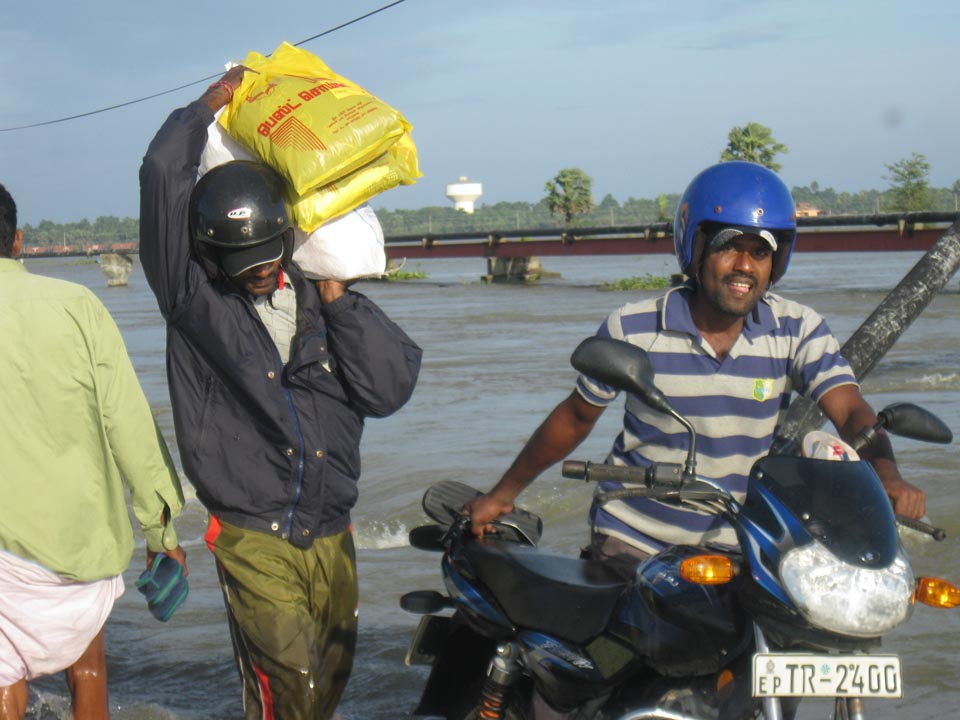
One of the victims of the Sri Lanka flooding this month ( January 2011)


Rose Charities Sri Lanka staff deliver emergency food to children and families stranded by the flooding. Motorcycles can often go where other vehicles cannot

Saturday, January 8, 2011

Noot Seear (co-founder of Rose Charities USA) has a lovely website...

 "During the last 13 years of her career, Noot has remained established in the fashion industry, and yet has found time to work on outside projects close to her heart. Brought up in a family dedicated to raising money and awareness for children in the developing world, Noot became the chairman of the board of Rose Charities in 2005. Rose produces events in New York City and Vancouver, to raise money and support for the likes of survivors of natural disasters and children born with birth defects in third world countries.  Her commitment to Rose has taken her around the world to visit Rose supported clinics in Sri Lanka, Cambodia and Vietnam..."

See    http://nootseear.com

Wednesday, January 5, 2011

Care with codeine

Codeine is a commonly used painkiller in both developing and non developing countries. Often it is sold as a combination with acetaminophen / paracetamol in 'cocktail' drugs. It is cheap and usually readily available.  Research at the University of British Columbia (Stuart MacLeod and Noni MacDonald) indicates that it should be used with more caution than previously condsidered.

Codeine acts by being metabolized to morphine in the body, but the degree of metabolism depends on a person's genetic make-up. Thus the amount of morphine produced can be seriously unpredictable.This it may be that for some persons, the drug has almost no pain-killing effects

For infants, the problem can be particularly serious. The researchers have cited two children who died after being given codeine following a tonsillectomy, and two studies have shown toxicity in infants being breastfed by mothers taking codeine.

While for the vast majority, codeine remains a very useful  analgesic for pain control  its effects must neither be taken for granted by users/prescribers/health workers, nor assumed to always be benign for everyone.
This combined with the non-existent controls on the sale of of strong drugs in many developing countries is a cause for concern. 

Thursday, December 16, 2010

Cambodian Tot passes pre-op screening tests... set for surgery

Little 'Tot' in Cambodia has passed all his pre-operation screening tests and so is now set for surgery.
We needed to screen for things like hemoglobin levels, and other blood chemistry. There is so much endemic disease, in Cambodia, not to mention malnutrition / poor diet that it is very important to screen carefully before surgery.  Any of these things, not least the awful problem of Malaria - Cambodia has some of the most drug resistant strains in the world. can put down the oxygen carrying capacity of the blood (hemoglobin levels) and make surgery dangerous.  So we needed to check that all is ok. And I am delighted to say that it is.

Tot's surgery can now go ahead. It is scheduled for the 4th January in Singapore.  All staff are donating their time free, including the surgeon, Dr Myra Elliot, an experienced, Singapore registered maxillo-facial expert. Singapore, like Canada has tight regulations on who can practice there so we are very lucky to get Dr Elliot.   Current plan is for Dr Sarom from First Rose Cambodia and Joanna Thomson (physio) from Rose Rehab Cambodia (both Rose Charities projects) to attend / assist the surgery also. 

Tot will convalesce until the 15th January in Singapore then fly back to Cambodia and to our Rose Charities medical facilities there.   So things are very much falling into place.  Vancouver donors have generously donated $1500 to date which will help enormously both with the surgical as well as the rehab elements.

We all intend to follow Tot long after he has recovered and been rehabilitated.  There is the moral argument whether it is appropriate to spend a lot of money on one individual  But by ensuring that Tot gets a proper education and a happy, productive life, that amount spent can be considered to be working over a lifetime.   An individual unable to communicate by speech, malnourished, and with all his debilitation would certainly  be a financial drain on his family or community over the years.  But restoring him to a place where he can have a normal life may create, though that life which will include education, a bright future for himself, his family and his community too.  So many more will be helped by the financial outlay than just one poor little Cambodian boy.